

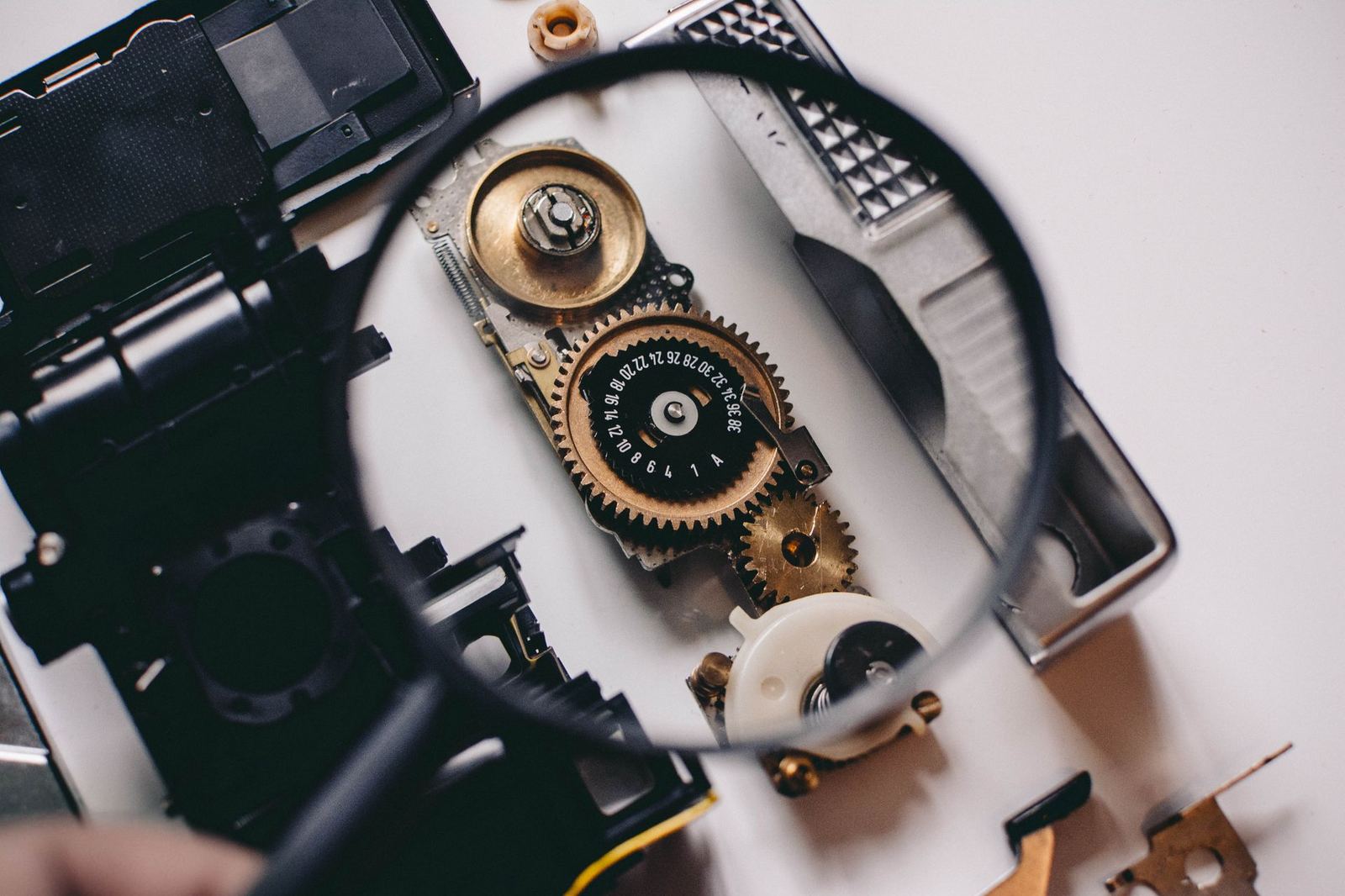
Camera, lighting and software selection; a pilot project in four steps.
Quality control in production lines still mostly relies on the human eye. Yet an operator inspects a part in 2-3 seconds, attention drops as hours pass and inspection quality falls to 70% by the end of the shift. Machine vision solves this problem, but where to start is unclear.
What does a machine vision system consist of?
- Camera: 2D (area or line scan) or 3D (structured light, laser triangulation)
- Lighting: The most critical component determining success in most projects; ring, bar, coaxial or dark-field lighting is selected.
- Lens and filter: Selected according to field of view and resolution.
- Processing unit and software: Classic image-processing algorithms or deep-learning-based classification.
- Integration: Communication with PLC, robot and MES
Which applications is it suited to?
- Measurement: Dimension, diameter, distance, angle (at ±0.02 mm)
- Presence/absence check: Are screws, gaskets, clips present after assembly?
- Surface defects: Scratch, burr, paint defect, weld spatter
- Reading: Barcode, QR, serial number with OCR
- Robot guidance: Bin-picking or tracking on a conveyor
Starting in four steps
- Define the problem: Which defect, at what tolerance, will be caught? Write the pass-fail criterion numerically.
- Collect samples: At least 50 good and 20 defective parts. Borderline parts are especially important.
- Verify with a pilot: Camera and lighting combinations are tested in the lab; catch rate and false alarm rate are measured.
- Integrate into the line: Cycle time matching line speed and a retest strategy are defined.
When is deep learning needed?
Classic algorithms are very reliable for measurement and defects of definite shape. When surface texture varies (casting, wood, leather, textile) and defect shapes are irregular, deep learning offers an advantage. Current models can be trained with 30-50 defective samples; however lighting and image quality remain decisive.
Why is lighting so important?
In about 70% of machine vision projects, failure comes not from the camera or software but from lighting. Dome or coaxial lighting is used to reduce reflections on shiny metal surfaces, and low-angle dark-field lighting for scratch detection. To avoid influence from ambient light, an enclosed camera station and flash synchronization are recommended.
Success criteria
A system with a catch rate above 99% and a false alarm rate below 1% is acceptable in production. Recording all results provides backward evidence in customer complaints.
Related Posts
Cobot or Traditional Robot? A Decision Guide
A comparison of the two technologies by payload, speed, batch size and safety criteria.
Read More