

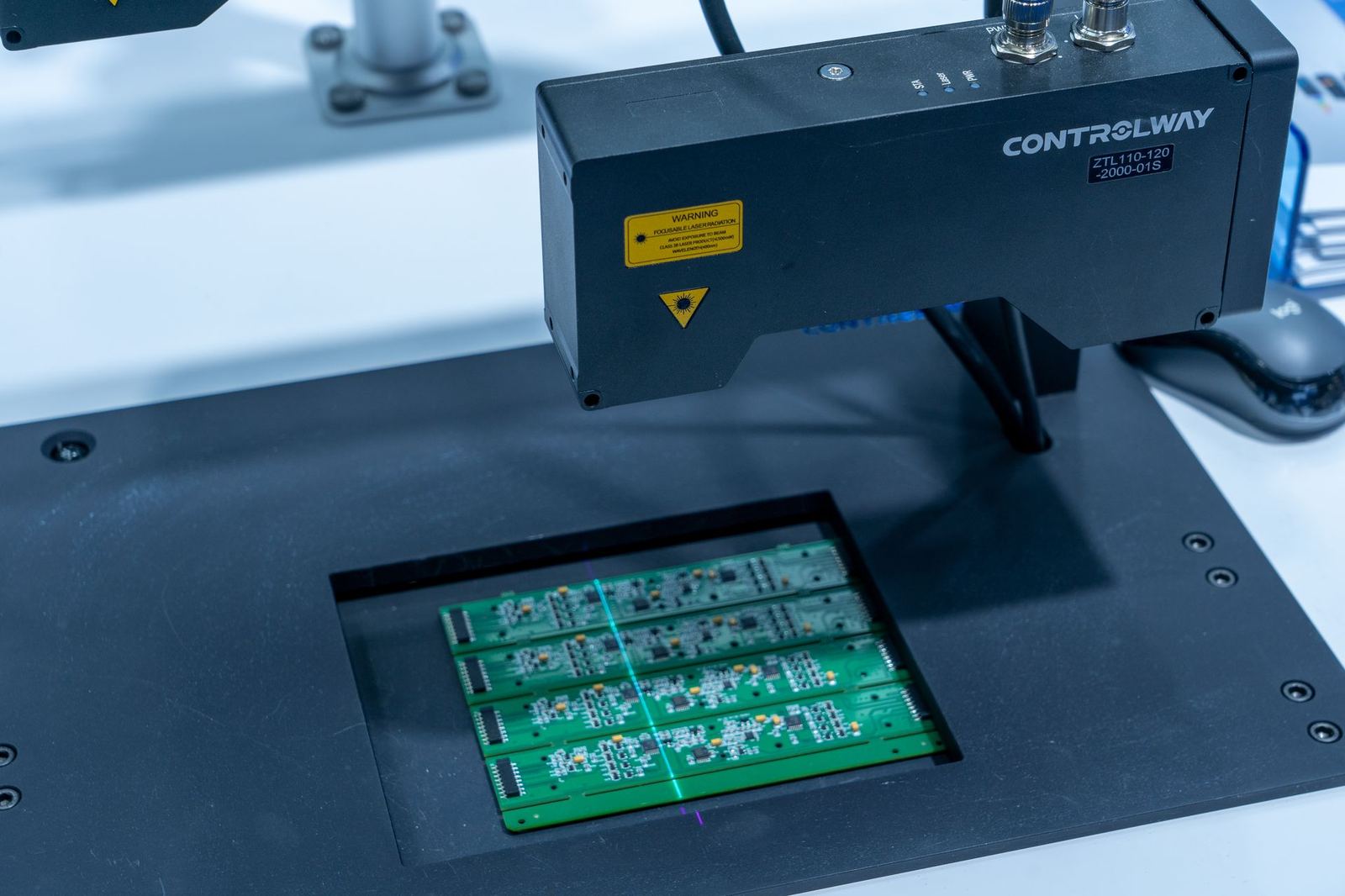
Part recognition, measurement, surface defect detection and robot guidance with 2D/3D camera systems.
In-cell or standalone
Visual inspection is one of the tasks most exposed to human fatigue. Machine vision systems inspect every part in milliseconds, with the same criteria and with records.
Application examples
- Dimension and tolerance measurement (±0.02 mm)
- Surface scratch, burr and paint defect detection
- Label, laser marking and serial number reading (OCR)
- Bin-picking: recognizing scattered parts with a 3D camera and handing them to the robot
With our deep-learning-based defect classification module, a model can be trained even with few defective samples. All inspection results are sent to the MES.
Scope of service
- ±0.02 mm measurement accuracy
- Defect classification with deep learning
- Bin-picking (3D)
- Results transferred to MES
Machine Vision and Quality Inspection — get a quote
Fill in the form and we will get back to you as soon as possible.
Frequently asked questions
How fast does a robot investment pay back?
The average payback in our projects is 14 months; 10-12 months for mobile cobot stations and 15-19 months for multi-robot welding lines. It depends on shifts, operator cost and scrap reduction. Our ROI calculator gives a first estimate.
What is the difference between a cobot and a traditional robot?
Cobots, thanks to force and speed limitation, work beside people without safety cages in most applications, are taught by hand and install quickly, but are limited in payload (3-30 kg) and speed. Traditional robots suit serial production requiring high speed and payload.
How many weeks does it take to deliver a cell?
Cobot stations take 4-8 weeks, standard robot cells 12-20 weeks and multi-robot lines 24-36 weeks. Feasibility and simulation add 2-3 weeks.
Can a robot be integrated with my existing machines?
Yes. We integrate with CNC machines, presses and injection molding machines regardless of brand and age. Adding machine-door automation and an I/O interface is usually enough.
How do you comply with safety standards?
A risk assessment per ISO 10218-2 and the Machinery Directive is made for every cell; safety functions are designed to ISO 13849 PL d. In cobot applications ISO/TS 15066 force and pressure measurements are made and a CE declaration of conformity is issued.