

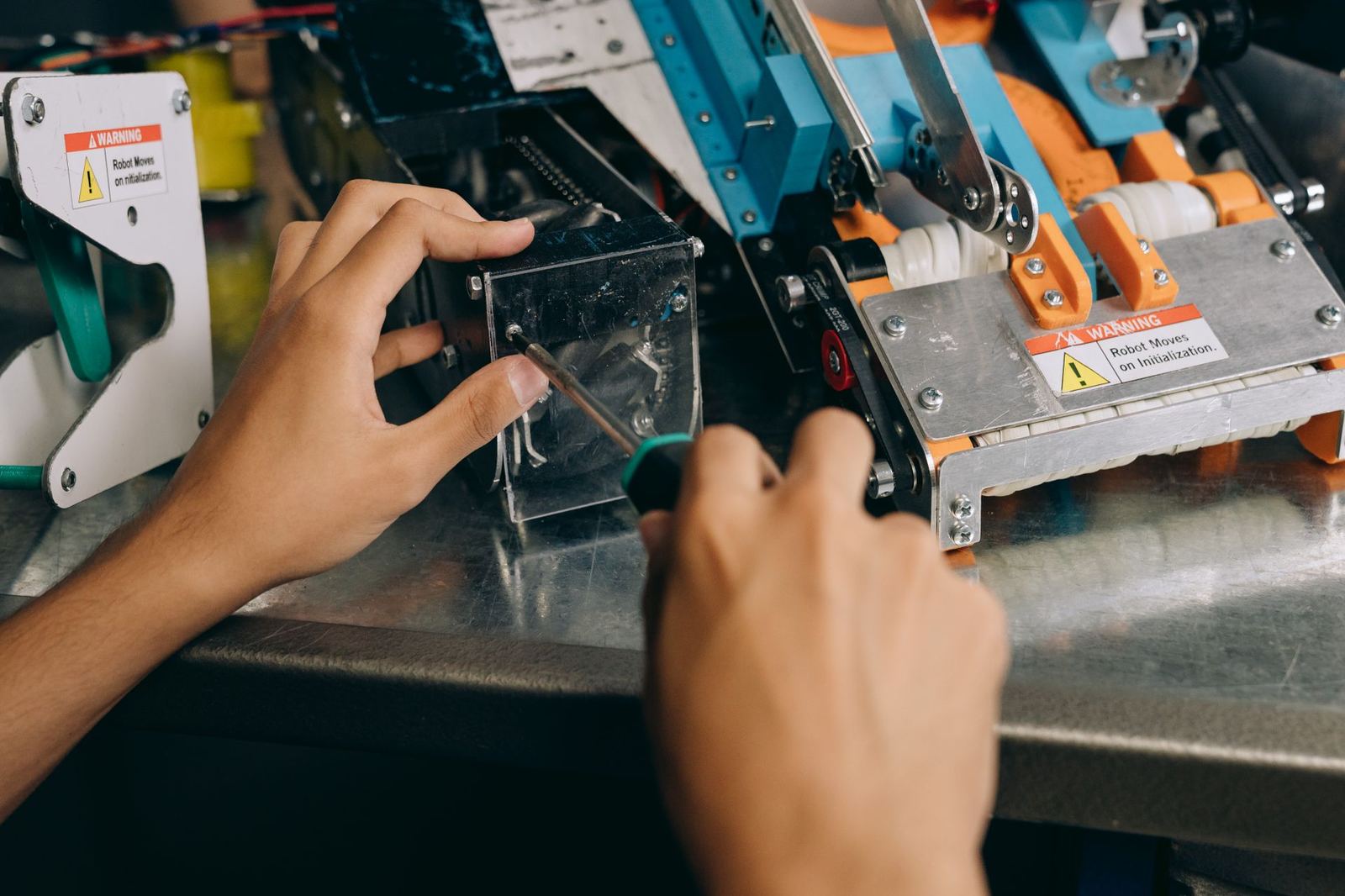
Preventive maintenance contracts, modernization of older robot cells and cloud-based 24/7 monitoring.
Annual contract
Unplanned stops in robotic lines create delivery risk in addition to lost production. Our maintenance contracts replace wear parts such as the robot's reducers, cables and belts based on operating hours.
What do we offer?
- Annual preventive maintenance and oil analysis
- Cable harness and reducer replacement
- Control and safety updates (retrofit) of older robot cells
- Remote monitoring and fault alerts from a cloud dashboard
- Remote response within 4 hours, on-site within 24 hours (SLA)
We can also include your existing robots in the maintenance scope, regardless of brand.
Scope of service
- Annual preventive maintenance
- Retrofit of older cells
- 24/7 remote monitoring
- SLA: 4 hours remote, 24 hours on-site
Maintenance, Retrofit and Remote Monitoring — get a quote
Fill in the form and we will get back to you as soon as possible.
Frequently asked questions
How fast does a robot investment pay back?
The average payback in our projects is 14 months; 10-12 months for mobile cobot stations and 15-19 months for multi-robot welding lines. It depends on shifts, operator cost and scrap reduction. Our ROI calculator gives a first estimate.
What is the difference between a cobot and a traditional robot?
Cobots, thanks to force and speed limitation, work beside people without safety cages in most applications, are taught by hand and install quickly, but are limited in payload (3-30 kg) and speed. Traditional robots suit serial production requiring high speed and payload.
How many weeks does it take to deliver a cell?
Cobot stations take 4-8 weeks, standard robot cells 12-20 weeks and multi-robot lines 24-36 weeks. Feasibility and simulation add 2-3 weeks.
Can a robot be integrated with my existing machines?
Yes. We integrate with CNC machines, presses and injection molding machines regardless of brand and age. Adding machine-door automation and an I/O interface is usually enough.
How do you comply with safety standards?
A risk assessment per ISO 10218-2 and the Machinery Directive is made for every cell; safety functions are designed to ISO 13849 PL d. In cobot applications ISO/TS 15066 force and pressure measurements are made and a CE declaration of conformity is issued.